
Tench’s Campaign Strategy
Deception PointThis flow traces Marjorie Tench’s effort to manage the election through calculated provocation, coercive evidence, and the consequences of pursuing control over truth.
increasing Bearing strength in each event
 decreasing
Bearing strength in each eventdecreasingThe Strategist Behind the President

The Strategist Behind the President
A political operator
Marjorie Tench is a powerful adviser whose strategic skill helps Zachary Herney win office. Her intelligence and willingness to work behind the scenes make her valuable despite her abrasive manner.
She believes political timing and disciplined messaging can determine whether a good policy survives public opposition.
A hardening method
As the campaign weakens, Tench grows more willing to manipulate the opposition. She sees Sexton’s anti-NASA campaign as a threat to the agency and the President, and treats his vulnerabilities as tools to be arranged.
Her effectiveness depends on an increasingly thin boundary between strategic persuasion and coercion.
A Provocative Debate
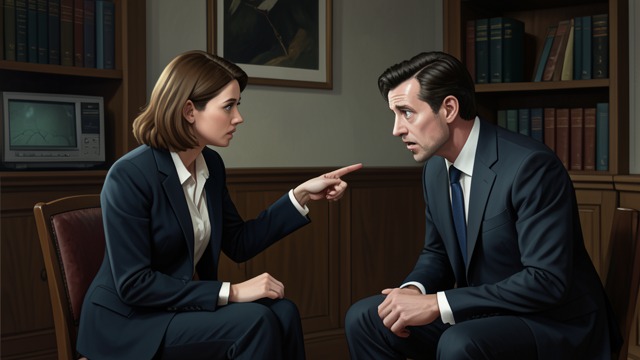
A Provocative Debate
The calculated question
Tench appears on CNN herself and asks Sexton whether he would abolish NASA if exploration could not be done for less. She understands that his broad anti-spending message becomes vulnerable when forced into a clear choice.
Sexton commits to abolishing the agency and then dismisses the prospect of extraterrestrial life, giving Tench a set of statements that will soon collide with the announcement.
A tactical success
The exchange is designed to make Sexton define his position, not to persuade him. Tench knows that a candidate’s own words can become more damaging than a direct accusation.
Her maneuver succeeds, but its success also reinforces the campaign’s reliance on traps rather than a public discussion of NASA’s actual future.
Pressuring Gabrielle
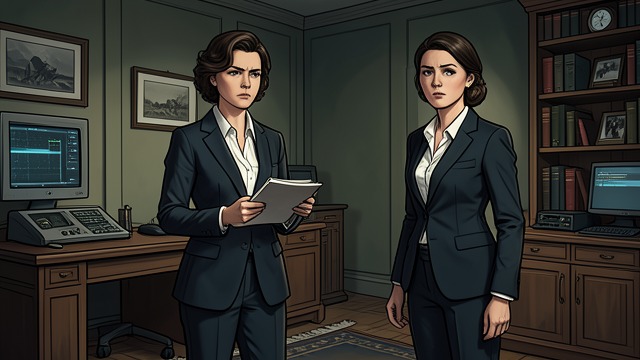
Pressuring Gabrielle
A private leverage campaign
Tench summons Gabrielle and presents evidence about Sexton’s finances and affair. She asks Gabrielle to confess, arguing that a contained personal scandal could avoid a wider corporate investigation.
The offer is wrapped in claims of patriotism and concern for the country, but it also threatens Gabrielle’s reputation and career.
A tactic exposed
Tench assumes Gabrielle will accept the White House’s account because the evidence appears extensive. Gabrielle instead questions how it was obtained and whether the President is truly as principled as Tench claims.
The encounter reveals the cost of Tench’s approach: even accurate evidence can lose credibility when delivered through coercion.
Rachel’s Warning Dismissed

Rachel’s Warning Dismissed
A call from the Arctic
Rachel calls the White House on an insecure line and says that the meteorite data is false. She reports that the rock was inserted from below the ice and that witnesses have been attacked.
Tench has no direct access to the evidence and views Rachel’s call through a political lens, suspecting an effort to harm the President.
The danger of certainty
Instead of delaying the broadcast, Tench threatens Rachel with her recorded endorsement and orders her to stop making allegations. Her certainty helps the announcement proceed, but it also prevents the administration from hearing a crucial warning.
The scene shows a strategist’s strength becoming a weakness when interpretation is fixed before evidence arrives.
A Strategy Ends in Death
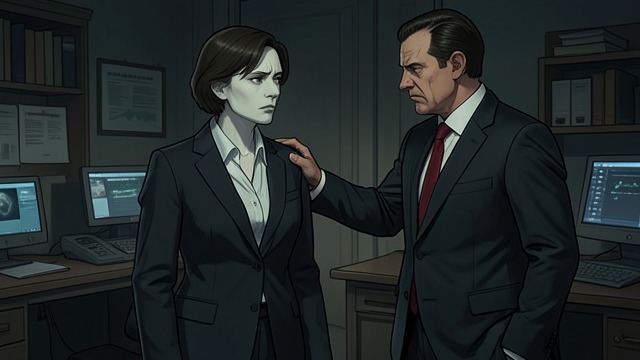
A Strategy Ends in Death
The hidden operation surfaces
Tench’s efforts to control the political story unfold alongside Pickering’s covert operation. She has helped secure a misleading public narrative, but she does not understand the full extent of the conspiracy.
When she meets Pickering privately, he kills her to prevent her from discovering and exposing his role.
Political calculation and human cost
Her death is later treated by Pickering as politically useful, but it is not a strategic victory for the person killed. The adviser who built a career on managing political consequences becomes a victim of the secrecy she helped maintain.
Her fate underscores the danger of believing that proximity to power guarantees control over it.
Before the discovery announcement
Early afternoon on announcement day
Late afternoon on announcement day
Minutes before the broadcast
Late night after the broadcast
